
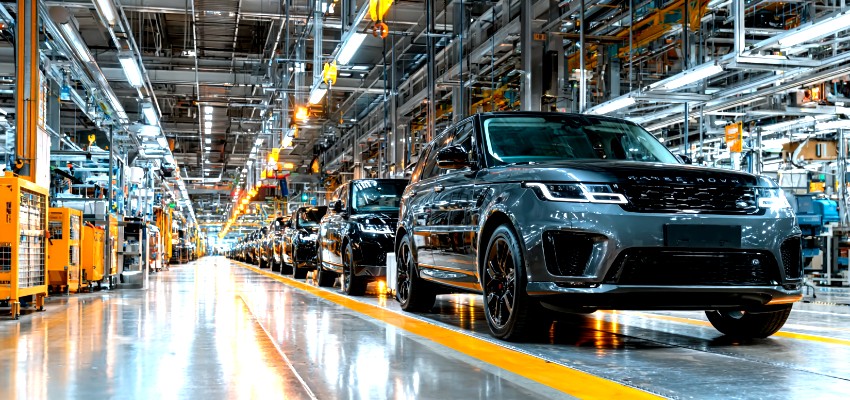
In the wake of a significant cyber-attack, Jaguar Land Rover (JLR) faces an ongoing production shutdown, with reverberations felt throughout the automotive industry. This incident, which struck the British automotive giant at the end of August, has disrupted operations at JLR’s primary facilities in Solihull, Halewood, and Wolverhampton, extending into its global supply chain, impacting more than 33,000 direct employees and a further 100,000 in the supply network.
Business Secretary Peter Kyle, alongside Industry Minister Chris McDonald, has been actively engaging with JLR’s senior management, including CEO PB Balaji, to assess the situation and strategize on a recovery plan. The ministers, representing the UK government’s Department for Business and Trade (DBT), emphasize a dual approach: expediently resuming JLR operations and safeguarding the extensive supplier network that underpins the UK’s automotive sector.

Peter Kyle articulated the government’s commitment, stating, “Getting JLR back online as soon as possible is my top priority,” acknowledging the “deeply worrying” nature of the disruption on JLR, its supply chain, and the wide array of stakeholders. The government is coordinating closely with the Society of Motor Manufacturers and Traders (SMMT) to aid in mitigating the incident’s impacts.
JLR has announced an extension of the production suspension until at least October 1, as it collaborates with cybersecurity specialists, the National Cyber Security Centre, and law enforcement to ensure a safe restart. The automaker confirmed it continues its investigation and phased planning for resuming operations, stating that their focus remains on supporting customers, suppliers, colleagues, and retailers.
The prolonged disruption reveals critical vulnerabilities in automotive manufacturing frameworks, heavily reliant on integrated digital systems. This attack underscores the risks associated with complex supply chains, where even a single cyber incident can precipitate widespread operational and financial impacts.
In response to these challenges, discussions have been initiated regarding possible government support for affected suppliers. The Unite trade union, voicing concerns over suppliers struggling to maintain payrolls, urges the implementation of a furlough scheme similar to those used during the COVID-19 pandemic. Meanwhile, industry analysts, including Johnathan Dudley from Crowe UK and Professor David Bailey from the University of Birmingham, note the precariousness of small suppliers, emphasizing that governmental intervention may be necessary to prevent long-term economic ramifications.
In the broader context, this situation raises questions about the resilience of the UK industry to cyber threats. As JLR navigates through this crisis, collaboration between government entities and the private sector is crucial. The outcomes of this incident could shape future policies and preventive strategies within the automotive industry and other sectors.
Moreover, the impact on supporting industries such as logistics, professional services, and retail, which rely on the automotive sector, amplifies regional economic stress. Members of Parliament from affected regions, including the West Midlands and Merseyside, are advocating for emergency loan programs to help sustain businesses.
As JLR continues to align its crisis response, the path forward requires a meticulous focus on restoring operations securely and responsibly, underpinning long-term stability and resilience within its supply infrastructure. The combined efforts of JLR and the government demonstrate a unified approach to navigating this unprecedented challenge and reinforcing fortitude across the automotive landscape.
News Sources
- Jaguar Land Rover receives lifeline after major cyber attack as Labour makes production restart ‘top priority’ (GBN)
- Jaguar Land Rover prolongs production halt after cyberattack, as UK government steps in as supply chain feels strain (Industrial Cyber)
- Jaguar Land Rover cyberattack sparks industry crisis (Rolling Out)
- Jaguar Land Rover cyber attack prompts ‘extraordinary meeting’ as production shutdown continues (GBN)
- Jaguar Land Rover extends production shutdown after cyber attack, supply chain faces mounting pressure (Retail Systems)
Assisted by GAI and LLM Technologies
Source: HaystackID published with permission of ComplexDiscovery OÜ