
eDiscovery and Information Governance

Filter posts by category

eDiscovery and Information Governance Must Read

HaystackID earns Band 2 rankings in two 2026 Chambers guides

HaystackID advanced to Band 2 in the 2026 Chambers Crisis & Risk Management Guide and maintained Band 2 in the Chambers Litigation Support Guide, extending a nine-year recognition run. The rankings reflect growing overlap between cyber incident response, privacy review, regulatory disclosure and litigation support, as legal and compliance teams increasingly seek providers that can combine speed, technical depth and defensible workflows under one roof.

HaystackID earns Band 2 rankings in two 2026 Chambers guides Read More »

eDiscovery and Information Governance

HaystackID Brings AI Privacy and Discovery Stack to Dublin as European Compliance Pressure Mounts

HaystackID heads into the 2026 Dublin Tech Summit with an expanded European product set built around AI-driven privacy, DSAR response and deepfake forensics, and a regulatory thesis aimed squarely at the EU AI Act, NIS2 and DORA.

HaystackID Brings AI Privacy and Discovery Stack to Dublin as European Compliance Pressure Mounts Read More »

eDiscovery and Information Governance

Getting Beyond Spreadsheets: Handling Structured Data Productions

Courts are increasingly rejecting the argument that structured data falls outside traditional discovery obligations. Reviewing key 2025 cases, Phil Favro shows how judges expect parties to produce relevant database ESI, address usability and format, and balance those duties against undue burden. The result is a clearer roadmap for handling structured data discovery in 2026 and beyond.

Getting Beyond Spreadsheets: Handling Structured Data Productions Read More »

eDiscovery and Information Governance

The EU’s E-Evidence Framework Goes Live in August and Most of Europe Isn’t Ready

The EU’s E-Evidence Regulation becomes applicable on August 18, 2026, but many member states and service providers may not be ready. This article explores the legal, technical, cybersecurity, privacy, and eDiscovery implications of a framework that will soon allow cross-border demands for electronic evidence on 10-day and even eight-hour timelines.

The EU’s E-Evidence Framework Goes Live in August and Most of Europe Isn’t Ready Read More »

eDiscovery and Information Governance

HSR Filings Hit 203 in March 2026 as Court Overturns Expanded Form and GDP Slips to 0.5%

HSR premerger filings hit 203 in March 2026 — the highest monthly total since December — as a federal appellate court restored the legacy HSR form and Q4 2025 GDP growth was revised down to a slim 0.5 percent. Here is what the numbers mean for deal advisors and legal operations teams planning for the rest of the fiscal year.

HSR Filings Hit 203 in March 2026 as Court Overturns Expanded Form and GDP Slips to 0.5% Read More »

eDiscovery and Information Governance Editors Pick

The April–May Compliance Crunch: A Practitioner’s Calendar for eDiscovery and Information Governance

Four compliance deadlines converge between April 18 and May 19, 2026 — NIS2 enforcement, the overhauled COPPA Rule, a federal vote on AI evidence standards under proposed FRE 707, and the TAKE IT DOWN Act’s platform requirements. Here is what eDiscovery and information governance professionals need to know.

The April–May Compliance Crunch: A Practitioner’s Calendar for eDiscovery and Information Governance Read More »

eDiscovery and Information Governance Editors Pick

Protecting Privilege and Work Product in Discovery After Heppner and Warner

Two 2026 decisions, Heppner and Warner, show that courts are not taking a uniform approach to privilege and work product claims involving generative AI. This article explains what those rulings mean for AI-assisted document review, ESI workflows, and the need for counsel-led discovery protocols.

Protecting Privilege and Work Product in Discovery After Heppner and Warner Read More »

eDiscovery and Information Governance Must Read

Defensible by Design: What Legal Teams Must Get Right About AI Privilege Workflows

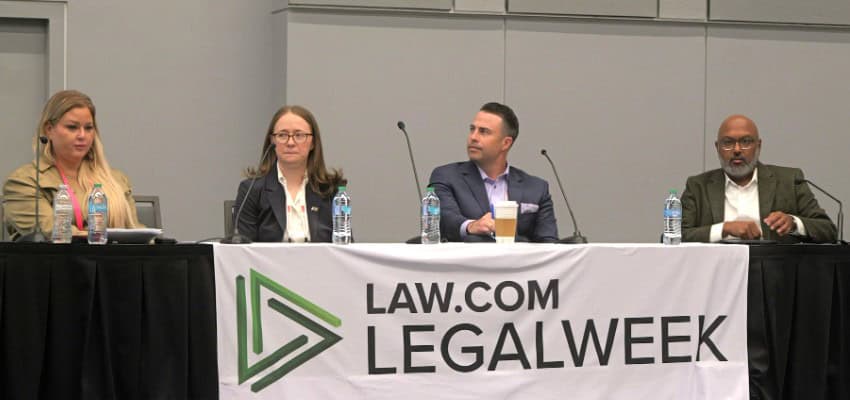
AI-assisted privilege review is no longer theoretical. This article unpacks the Legalweek 2026 discussion on defensible AI workflows, privilege log generation, Rule 502(d) protections, and the legal risks of using consumer AI tools in high-stakes discovery.

Defensible by Design: What Legal Teams Must Get Right About AI Privilege Workflows Read More »

eDiscovery and Information Governance

The New Face of Discovery: HaystackID’s CoreFlex Brings AI, Slack, and Enterprise Data into One Legal Workflow

HaystackID’s Legalweek 2026 announcement positions CoreFlex as a unified legal workflow for Slack, Microsoft Purview, structured chat, forensic collections, third-party productions, and AI-enabled discovery. The bigger story is not just new features, but a platform strategy built around defensibility, governance, and matter-centric execution.

The New Face of Discovery: HaystackID’s CoreFlex Brings AI, Slack, and Enterprise Data into One Legal Workflow Read More »

eDiscovery and Information Governance Must Read

Information Governance for Enhanced Legal Hold Process and Improvement

Employee turnover can undo even a well-drafted legal hold—especially when company-issued phones and tablets aren’t tracked or returned. Drawing from In re Local TV Advertising Antitrust Litigation, Phil Favro explains how device return policies, custodian tracking, and practical governance controls can preserve text messages, reduce spoliation risk, and improve legal hold defensibility.

Information Governance for Enhanced Legal Hold Process and Improvement Read More »

eDiscovery and Information Governance

Keeping Current with eDiscovery Search Trends

Despite growing AI adoption in eDiscovery, traditional practices like keyword search and email threading remain vital. Recent rulings in Mosaic, Tecfidera, and Soqui reveal how courts are navigating disputes over search relevance, production formats, and contextual messaging, offering critical insights for legal and information governance professionals.

Keeping Current with eDiscovery Search Trends Read More »

eDiscovery and Information Governance Must Read

Avoiding Harsh Sanctions After Technology Failures: Lessons from Recent Cases

By Phil Favro, Contributing Author for HaystackID In the age of Artificial Intelligence, organizations need technology to achieve their goals. Technology is indispensable. But what happens when technology fails? As often as technology works and functions well, it can also

Avoiding Harsh Sanctions After Technology Failures: Lessons from Recent Cases Read More »