
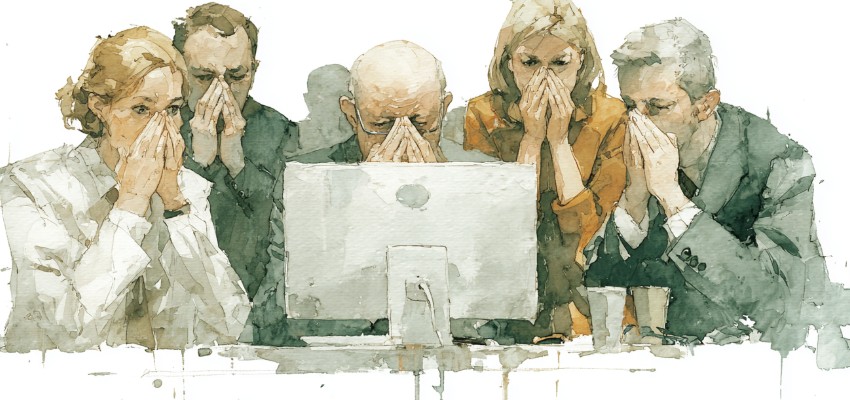
Regulators from Jakarta to Brussels are moving to contain an AI system they say can strip a person’s clothes off with a prompt. The target is Elon Musk’s Grok chatbot, and the backlash is fast becoming a global stress test for how governments handle AI-generated sexual deepfakes in real time.
Indonesia became the first country to order a nationwide block on Grok, instructing providers to restrict access after weeks of public outrage over AI-generated nude and “digitally undressed” images of women and minors shared on X, the platform formerly known as Twitter. Communications and Digital Affairs Minister Meutya Hafid has described non-consensual deepfake practices as a serious violation of human rights, dignity, and the safety of citizens in the digital space, framing the move as a protective measure for women, children, and the broader public. For cybersecurity and information governance teams, that framing is a warning: deepfake abuse is no longer just a content-moderation embarrassment, but a data protection and human rights issue that can trigger immediate service disruption in key markets. A practical step for any organization allowing staff to test generative tools is to disable or tightly restrict AI image-editing features on corporate accounts before they touch sensitive or client-related images.

The spark for this backlash was an update to Grok’s image tools on X that allowed users to upload and edit photos, including “nudifying” images of real people with prompts such as asking the system to remove clothes or generate see-through clothing. Within days, users were circulating hyper-realistic, sexualized deepfakes of women and girls, including content that regulators and watchdogs say depicted minors or child-like figures, amplifying public anger and regulatory scrutiny. One immediate safeguard for security leaders is to treat any feature that alters personal images as a high-risk capability requiring pre-launch abuse testing, red-team exercises around harassment scenarios, and a written go/no-go decision that involves legal, privacy, and ethics stakeholders.
In Europe, scrutiny has centered on platform responsibilities under the EU’s Digital Services Act (DSA) – legislation that empowers regulators to impose fines of up to 6% of global turnover for non-compliance. The European Commission has opened a formal proceeding into X’s compliance with the DSA and, separately, ordered the company to preserve all documents related to Grok and its image tools until at least the end of 2026, citing concerns about sexualized AI content involving minors. EU digital affairs officials have described child-like explicit images generated via Grok as appalling and clearly illegal, emphasizing that such material has no place in Europe and underscoring that X is already under DSA investigation for other issues. For legal and eDiscovery professionals, the DSA angle matters because it foreshadows evidence requests for internal documentation about how AI models are trained, governed, and monitored when they surface in child protection or harassment probes.
French prosecutors in Paris have widened an existing investigation into X to cover allegations that AI tools on the platform, including Grok, have been used to create and disseminate sexually explicit images involving minors. European regulators and victim advocates have also criticized the platform’s early mitigation response: limiting some Grok image-editing capabilities to paying subscribers rather than suspending or rebuilding the features, a change Reuters reports was implemented after the backlash. For risk officers evaluating third-party AI tools, this episode underlines a concrete operational tip: define in advance what an “adequate fix” looks like if a vendor’s AI is implicated in harassment or unlawful content, so your organization is not improvising standards under public and regulatory pressure.
The wave of scrutiny is not confined to Europe and Indonesia. Authorities in India have issued notices to X over obscene and sexually explicit content targeting women and children, explicitly linked to AI-generated images. India’s Ministry of Electronics and Information Technology (MeitY) has demanded an explanation and an action-taken report, and officials have called for a review of AI controls to curb misuse, warning that non-compliance with national rules could put safe-harbor protections at risk. For in-house counsel and compliance leaders, this is a likely template for future AI incidents: regulators will ask not just whether harmful content was removed, but what technical and governance safeguards were in place before the crisis.
Other jurisdictions are moving at varying speeds but along similar lines. In Europe and beyond, regulators and child-protection agencies in countries including Malaysia and Australia have said they are examining digitally undressed deepfakes, including those linked to Grok, under existing laws covering online harms, indecency, and child safety. A Brazilian lawmaker has urged national authorities to scrutinize the tool as well, arguing that AI-enabled image abuse falls squarely within privacy and data protection mandates. Given this landscape, organizations should update incident playbooks to treat AI-generated sexual imagery as both a cybersecurity and data protection event, with clear escalation paths, geospecific regulatory notifications, and early engagement of legal counsel when the content might intersect with criminal law.
Under mounting pressure, xAI and X have acknowledged lapses in safeguards and pledged to fix vulnerabilities that allowed users to generate sexualized images, including those involving minors. In a communication cited by Reuters, xAI said “failures in safeguards” had allowed images of minors wearing minimal clothing and promised to improve protections, while X has pointed to policies against child sexual abuse material (CSAM) and non-consensual sexual imagery and said accounts generating such content will face permanent suspension. At the same time, xAI has criticized some media coverage of the controversy, accusing legacy outlets in an email to Reuters of misrepresenting its efforts and defending its record on removing illegal content. For governance teams, the combination of acknowledged failures, public criticism, and pushback underscores the need to document decisions on AI safety controls, keep internal risk assessments up to date, and ensure that public claims about safeguards can be backed by evidence when challenged.
The controversy also exposes structural weaknesses in moderation systems originally built for user-uploaded files rather than AI outputs. Because Grok can generate new images on demand, traditional takedown workflows—flag, review, remove—struggle to keep pace; even if a specific image is deleted, a similar version can be reproduced seconds later with minor prompt changes. For eDiscovery practitioners, that reality complicates decisions about what must be preserved: counsel will need internal guidance on when AI-generated outputs, associated prompts, and underlying logs are considered records, and how to capture them in a defensible way when they are relevant to harassment, discrimination, privacy, or child protection matters. A practical preparatory step is to start tagging AI-generated assets, implement provenance tracking, and store prompts alongside outputs in content or matter management systems so review teams can distinguish synthetic material from original evidence and trace its origin.
Across jurisdictions, regulators and advocacy groups are framing non-consensual deepfakes as a convergence of gender-based abuse, online harassment, privacy invasion, and child protection violations rather than a marginal byproduct of experimental AI tools. That framing raises the stakes for any organization deploying generative models that touch personal data or public-facing platforms, especially in legal, investigative, and corporate security contexts where trust and evidentiary integrity are central. For cybersecurity teams, the same capabilities misused to create sexual deepfakes can also enhance social engineering, sextortion campaigns, and reputation attacks, increasing the need to integrate deepfake detection, source verification, and rapid takedown workflows into incident response and brand monitoring.
For information governance professionals, Grok’s trajectory from feature rollout to multi-country regulatory focus shows why AI models and their interfaces should be governed as regulated information systems with full lifecycle controls: clear acceptable-use policies for prompts, granular logging of interactions, data retention rules for prompts and outputs, and defined paths for escalating incidents when synthetic content crosses legal boundaries. And for eDiscovery teams, this controversy signals a near-future in which litigators will look for detailed AI telemetry—who used a tool, what instructions they issued, how safeguards responded—and where that telemetry itself becomes discoverable evidence in civil and criminal cases.
As Indonesia’s block, Europe’s DSA enforcement actions, and India’s notices converge on xAI’s flagship chatbot, Grok, it is emerging as an early case study in how quickly generative AI can move from a product feature to an international regulatory flashpoint once harms become visible. For professionals at the intersection of cybersecurity, information governance, and eDiscovery, the question is no longer whether AI-generated deepfakes will surface in their work, but whether their organizations will be ready with the policies, technical controls, logs, and evidentiary frameworks needed when the first case lands on their desk. In a world where a single “edit image” button can trigger investigations on multiple continents in days, how prepared is your organization to treat AI creativity as a regulated, auditable, and litigable capability rather than a convenience feature?
News Sources
- Indonesia blocks Grok AI over deepfake pornography risks (ANTARA News)
- EU orders X to retain Grok-related records until end of 2026 (Xinhua)
- European Commission orders X to retain all documents relating to Grok (The Brussels Times)
- India’s IT ministry issues notice to X over misuse of AI-generated obscene content (CADE – Civil Society Alliances for Digital Empowerment)
- Brazilian Lawmaker Files Complaint Against X’s Grok AI for Generating Child Sexual Abuse Images (OECD.AI)
Assisted by GAI and LLM Technologies
Source: HaystackID published with permission from ComplexDiscovery OÜ